
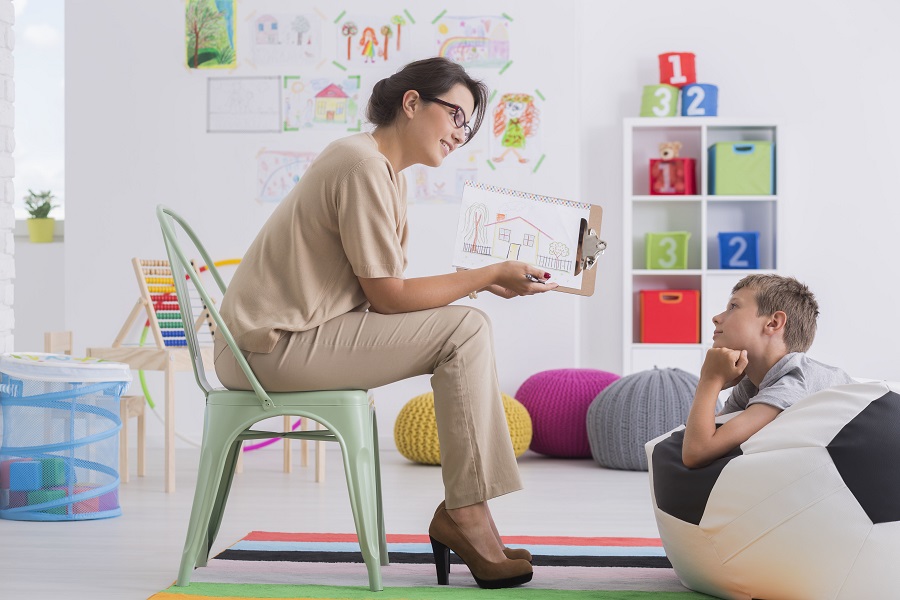
Do schools in Vietnam care about mental health?
Now that school is back in full swing in Vietnam, a question that has often been in the background, under the radar, is now becoming voiced more often: Is my son or daughter getting the mental health support they need at school?
What we already know is true: students perform much worse academically when they are stressed, anxious, worried and dealing with social and family pressures. During this time, a student’s nervous system is likely in ‘fight/flight/freeze’ mode. Physiologically, a person’s nervous system is most primed for learning and achievement when in a state of ‘rest and digest.’ This is the opposite of ‘fight or flight’ that we hear about so often. What many people don’t know is that the common stress our students deal with results in them being in ‘fight/flight’ more often than they are not, and this is obviously not a beneficial state for learning and success in school.
We all know that mental health services have been lacking in our schools for a long time. Western schools have made focused attempts to increase the access students have to mental health resources (increased counselors, psychologists, mindfulness programs, etc.). Of course, much more needs to be done in order to address the mental health issues in the West.
In Vietnam, until recently, mental health hasn’t been acknowledged as a vital element of student health. Now, it seems the tipping point may be approaching. According to a recent article about student health in Vietnam, close to 80 percent of students have problems that needed to be shared and want a private space in the school to seek help and talk about their problems. The same article mentions the recognition that psychological counselors are now very much needed in Vietnam, and perhaps should be seen as of equal importance as teachers. The article states that there is currently a massive training underway to train school staff as psychological counselors. How this training is done, and to what degree the training is effective, remains to be seen. However, it can be viewed as a good sign that the powers that be are supporting student access to mental health.
Students in Vietnam deal with many challenges. Not the least of which is the pressure from family and friends to excel academically. Combined with challenges to fit in socially, have an adequate social media presence, cyber-bullying, and the other normal and intense difficulties of being a teenager, these kids need help. Sometimes, a safe place to talk to someone provides a much needed outlet and release. Also important is the opportunity for the student to listen to someone who can help them see their challenges from another perspective. Additionally, students need to be taught how to manage their difficult emotions, which is what psychologists call the ability to ‘self-regulate.’ Instead of ‘acting out’ in ways that are harmful to themselves or others, students can learn how to respond to their difficulties with skill and wisdom, instead of their old ways of reacting impulsively.
Mental health professionals on campus, available to students, is ideal but not always realistic. An alternative is what’s been trending in Western schools, a practice called “mindfulness”. Students (and school staff/adults) who engage in mindfulness learn how to use the breath as an anchor to get back into ‘rest/digest’ and out of ‘fight/flight.’ Additionally, mindfulness practices have shown to be helpful with focus, increased compassion and inter-personal relationships. People who practice mindfulness learn how to ‘drop the story’ and come back to the present, which can be a very helpful tool.
Although mindfulness is not a substitute for mental health interventions, the science is becoming clear that it can be effective to help students deal with stress, social pressures and challenging emotions.
The Mindful Schools Curriculum is now being used in schools worldwide. This curriculum involves trained personnel coming into the classroom to introduce mindfulness practices and strategies to the staff and students. Mindfulness is a secular (non-religious) practice that can be integrated seamlessly into the classroom.